
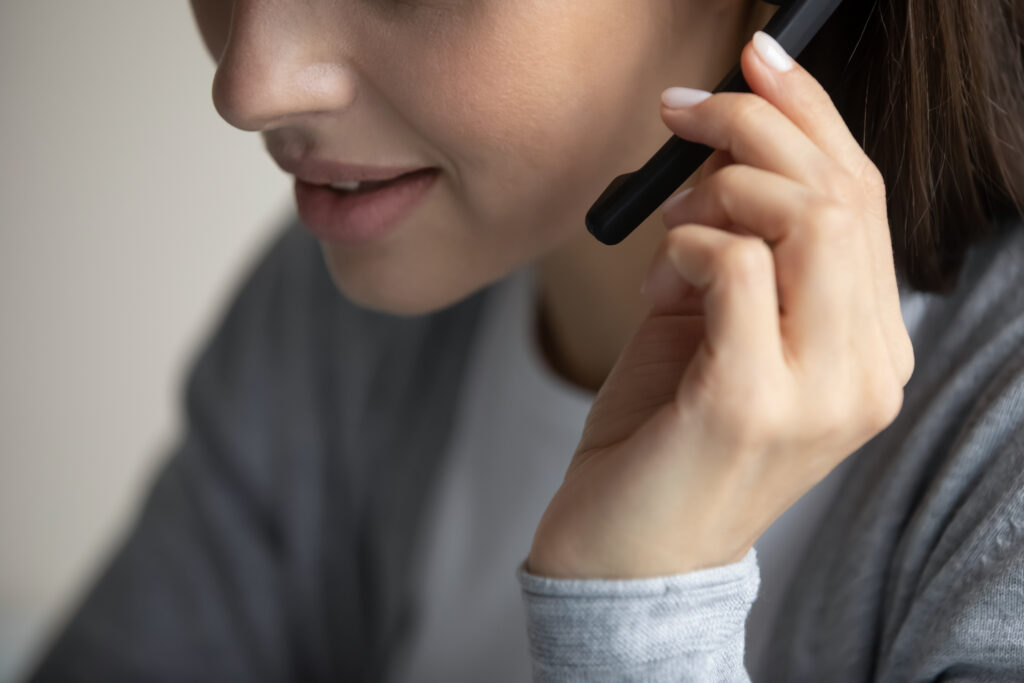
Choppy calls and poor audio can overshadow your interpretation skills. Here’s how to protect both the quality of your voice and your reputation.
In a traditional call center, employers provide and maintain the equipment needed for reliable service. But when you move to remote interpreting — trading the office commute and rigid schedule for flexibility — you also take on responsibility for your technology.
That shift matters more than most interpreters realize.
The reality is simple:
Clients experience your professionalism through your audio.
Accuracy may go unnoticed by non-linguists. Poor sound quality never does.
When Audio Fails, Everyone Works Harder
Even minor audio issues — choppiness, echo, lag — create friction across the entire interaction:
- The individual with NELP must work harder to be understood
- The provider must repeat and confirm information
- The interpreter must maintain accuracy under degraded input
Occasional glitches happen. But consistent call quality is not optional. It’s a critical part of the service you deliver.
Treat your technical setup like a core professional tool, not an afterthought.
Reliability Is Heard
Audio issues don’t just affect comprehension — they affect trust, patience, and outcomes.
Static, latency, and clipping increase cognitive load for everyone on the call. Over time, that erodes confidence in the interaction and in you.
If someone flags your audio quality, don’t take it personally. Treat it as professional feedback.
The good news: most issues are preventable with the right setup and habits.
Become Your Own IT Department
Remote interpreting means owning your tech.
Start with the right equipment:
- Invest in a high-quality headset (non-negotiable)
- Use reliable internet (wired when possible)
- Avoid “good enough” devices that introduce risk
Maintain your setup proactively:
- Keep your OS, drivers, and firmware updated
- Replace failing equipment immediately (don’t “work around it”)
- Watch for warning signs: intermittent audio, static, loose connections, battery issues
If your gear is unreliable, your service is too.
Your Daily Readiness Checklist
Before your first call, take 2–3 minutes to confirm:
- Headset is charged and properly connected
- Microphone and speaker levels are correct
- Quick voice test completed (record & playback)
- Backup options ready (spare headset, hotspot, alternate device)
- Notifications silenced; workspace quiet and private
This is a small effort with a big payoff.
Spot Patterns Early
If issues start to show up, don’t ignore them. Ask:
- Does this happen at a certain time of day?
- On a specific platform?
- With a particular device or connection?
Most recurring problems leave clues.
Your job is to catch them early and fix them fast.
Hire the Best Tech Support . . . You
Have a simple framework:
- Identify the issue quickly
- Take corrective action (adjust, reconnect, switch devices)
- Keep the call moving with minimal disruption
And just as important:
- Stay calm and professional
- Don’t over-apologize
- Don’t get defensive or assign blame
Clients don’t expect perfection, but they do expect competence and that you have a plan in place to remain in control of the situation.
Here’s a version of the framework you can print off and keep handy so you’re prepared for your next tech hiccup.

Final Thoughts
As a remote interpreter, you’re not just delivering words. You’re delivering clarity and stability.
So, ask yourself:
Does my setup support the kind of interpreter I want to be known as?
If the answer isn’t a clear yes, fix it.
Because in this profession, your reputation isn’t just built on what you say . . . it’s built on how clearly you are heard.
Interested in contracting with CLI? Hit up our requirements page to see if you qualify!